

Immediate emergency actions in the first five minutes
Discovering black, foul-smelling wastewater bubbling up through your basement floor drain and spreading across concrete, drywall, or carpet is a genuine residential emergency. Under Colorado Department of Public Health and Environment (CDPHE) guidelines, raw sewage is classified as Category 3 "blackwater," harboring hazardous biological contaminants including E. coli, Norovirus, Salmonella, and Giardia. Taking the correct actions within the first several minutes is vital to prevent catastrophic property loss, electrocution, and severe family illness:
1. Cease all interior water usage across the entire home immediately
The moment you discover water coming up the basement drain, establish a strict household water moratorium. Do not flush any toilets, take showers, run faucets, or operate dishwashers and washing machines. Every single gallon of water that drains from an upstairs bathroom or kitchen sink flows down the main plumbing stack and immediately empties out through the lowest opening—your basement floor drain. Continuing to use water upstairs turns your home into an active sewage pump.
2. Isolate the electrical hazard before entering standing water
Water conducts electricity. If sewage has risen high enough to approach basement baseboard heaters, floor receptacles, extension cords, or the bottom of mechanical appliances like your furnace and water heater, do not step into the water. If your electrical service panel is safely located outside the basement or on an dry upper floor, shut off circuit breakers supplying power to basement floor circuits before inspecting the drain.
3. Evacuate children and pets and quarantine the basement door
Airborne aerosolized pathogens and volatile organic compounds from standing sewage pose immediate respiratory risks. Close the basement access door, keep pets and children strictly upstairs, and ensure anyone entering the basement wears non-porous rubber boots, heavy nitrile or rubber gloves, and an N95 respirator mask. Never touch raw sewage with bare skin.
4. Do NOT pour chemical drain cleaners or caustic lye down the drain
When facing an active sewer backup, never pour commercial chemical drain openers, crystal lye, or hydrochloric acid down any drain fixture. Chemical openers are formulated for minor localized hair clogs in 1.5-inch sink traps; they have zero effect on a 4-inch main sewer line blocked 40 feet away in your yard. Pouring chemicals simply creates a caustic, toxic lake of standing acid that will severely burn our service technicians when they run mechanical cables into the line.
5. Dispatch a certified Littleton emergency sewer contractor
Main sewer lateral stoppages cannot be resolved with home plungers or hardware-store snake rentals. Clearing a pressurized mainline blockage requires commercial-grade, high-torque mechanical augers equipped with hardened root-cutting blades or 4,000 PSI hydro jetters operated through an exterior or basement cleanout by licensed master plumbers.
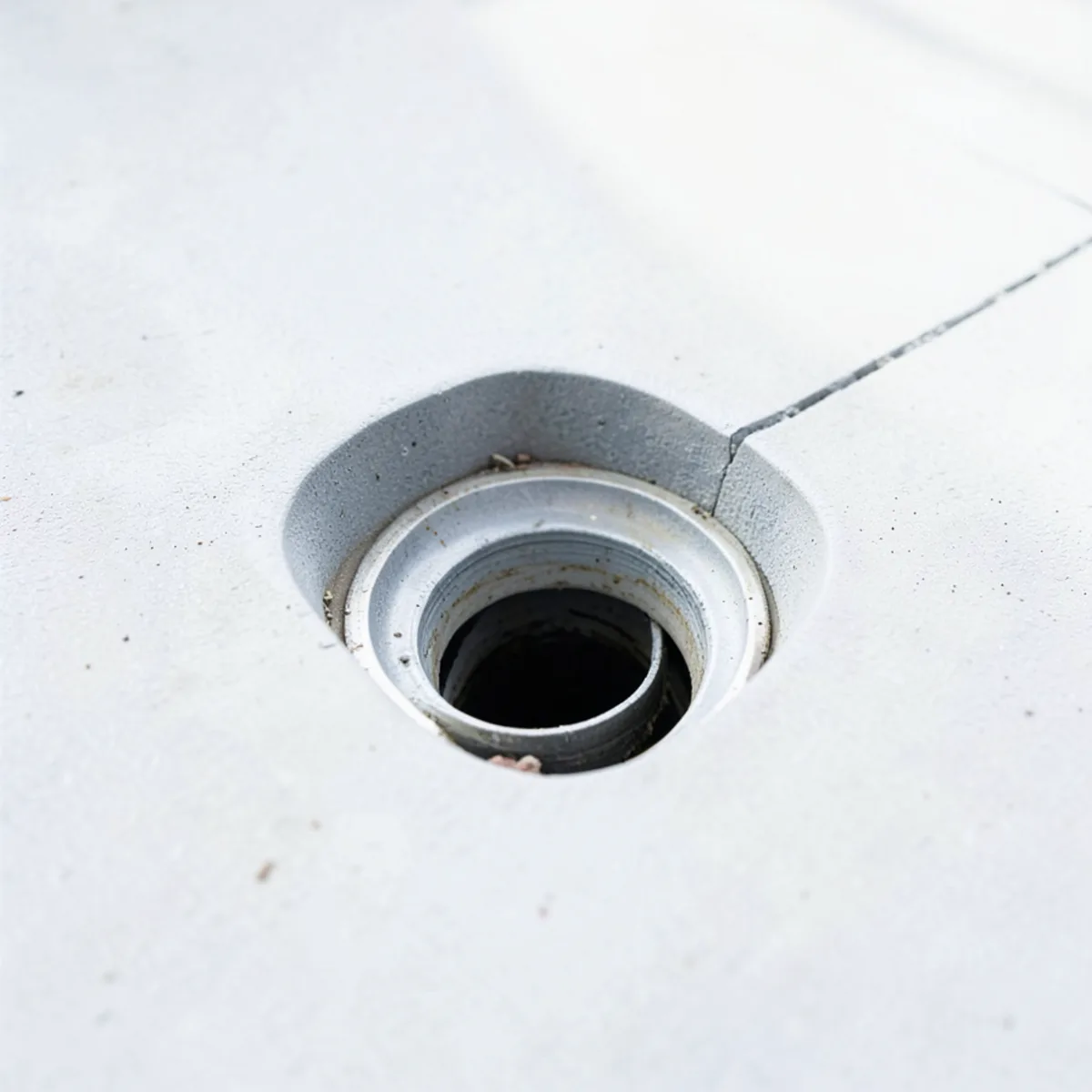
The physics of drainage stacks: why sewage floods the floor drain first
Many homeowners ask why a sewer line blockage causes an explosion of wastewater in the basement rather than overflowing the upstairs toilet where the clog seemed to originate. The answer lies in basic hydraulic principles and gravity drainage architecture. In standard residential construction throughout Littleton, Lakewood, and Denver, all upper-level plumbing fixtures—kitchen sinks, bathtubs, showers, and second-story toilets—discharge into vertical soil stacks. These vertical stacks terminate in a common building drain suspended beneath or embedded within the lowest concrete floor slab. When an obstruction develops outside the foundation in the exterior sewer lateral, wastewater can no longer exit to the street main. As additional water enters the system, it stacks vertically inside the pipes, building hydrostatic head pressure. Because the basement floor drain sits at the absolute lowest elevation in the entire plumbing network, gravity dictates that wastewater reaches the floor drain rim first. The drain essentially functions as a relief valve for the entire home.
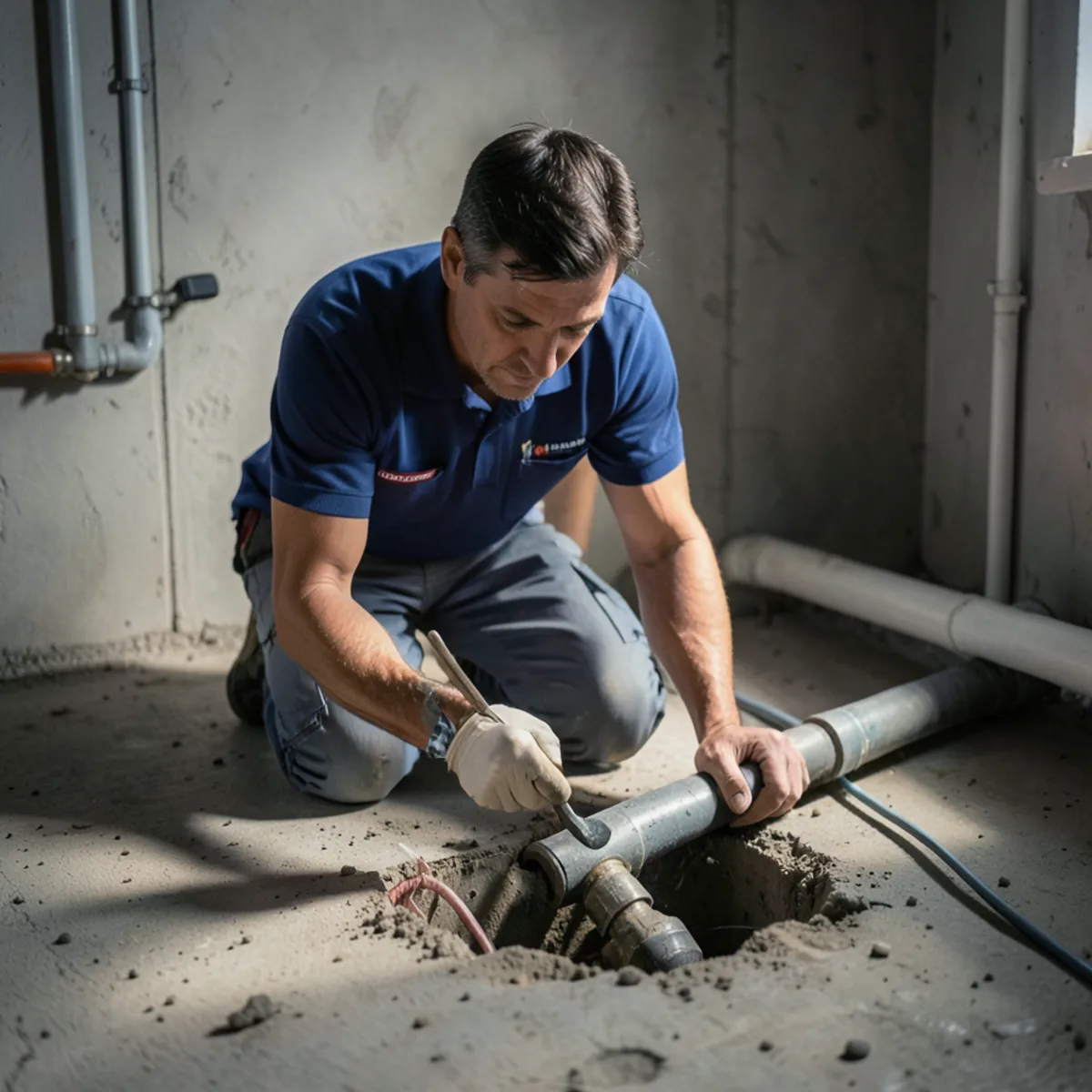
The three most common causes of basement floor drain backups in Denver
Decades of emergency service throughout Arapahoe, Douglas, and Jefferson Counties demonstrate that basement floor drain backups stem from three primary physical failures:
1. Massive tree root penetration in aged vitrified clay laterals
Homes constructed throughout the Front Range prior to the mid-1980s were largely plumbed with vitrified clay sewer pipes joined with mortar. In our dry climate, mature trees—particularly cottonwoods, silver maples, and willows—send tap roots ten feet underground seeking moisture. Roots exploit microscopic mortar fissures, expand rapidly inside the warm, nutrient-rich pipe, and weave dense root tapestries that catch toilet paper and cause sudden, complete line blockages.
2. Solidified fats, oils, and grease (FOG) trapped in pipe bellies
Expansive clay soils frequently heave and settle, creating sagging dips—known as "bellies"—in underground PVC or clay laterals. When cooking grease, liquid animal fats, and synthetic wipes pass through these low spots, grease congeals against standing wastewater, forming dense, rock-hard "fatbergs" that choke off flow.
3. Municipal sewer collector surcharge during severe Colorado weather events
During intense summer cloudbursts or rapid spring snowmelts, public storm and sanitary sewers across older metro corridors can become hydraulic surcharged. When city mains flow full, municipal sewage backs up through private service laterals, pushing neighborhood waste backward into low-lying basements lacking backwater protection.
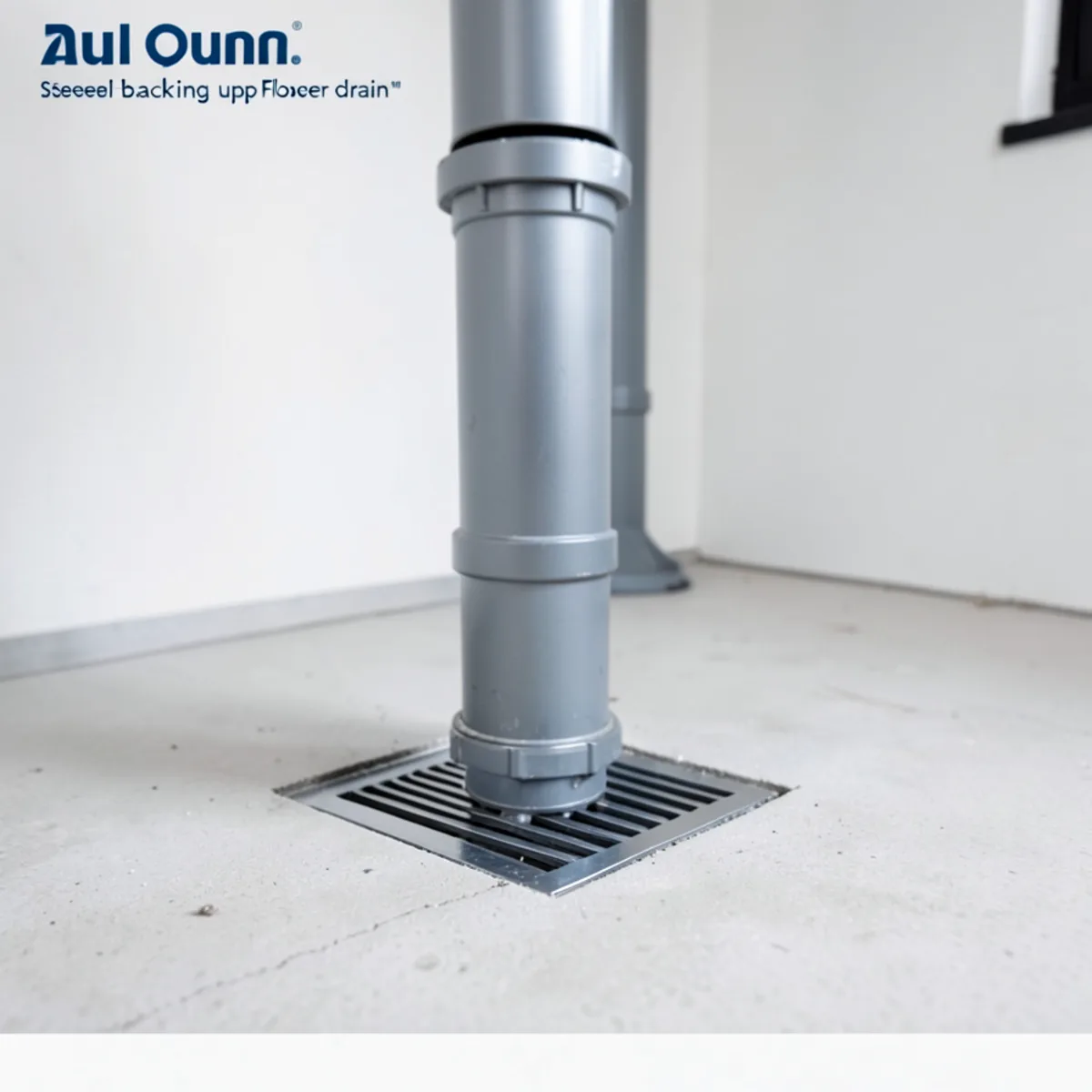
Professional diagnosis: mechanical augering, hydro jetting, and CCTV scoping
Resolving a basement floor drain emergency involves a two-phase protocol: immediate hydraulic clearance followed by definitive optical diagnosis. First, our licensed technicians access the lateral via an exterior cleanout sweep or the basement cleanout tee. We deploy a commercial heavy-duty cable auger equipped with an expanding four-blade root cutter to slice through root mats or puncture dense grease dams, relieving hydrostatic pressure and allowing the standing sewage in your basement to drain away naturally. Once flow is re-established, we perform high-velocity hydro jetting at 4,000 PSI to scour away clinging grease, scale, and remaining root tendrils. Finally, we conduct a comprehensive, unedited CCTV video camera inspection with an integrated 512 Hz Sonde radio transmitter. This inspection inspects the structural integrity of every foot of pipe from foundation to city main, revealing whether the backup was a routine obstruction or a symptom of broken clay, joint offsets, or settled pipe bellies.
Permanent engineering solutions: backwater valves and trenchless pipe replacement
Once the immediate backup is remediated, property owners must implement permanent preventative safeguards to protect finished basements from future flooding. Under International Plumbing Code (IPC) Section 715.1, any fixture with a flood level rim located below the elevation of the next upstream municipal manhole cover must be protected by an approved backwater valve. We install normally-open full-port backwater valves directly on the building sewer. In normal conditions, wastewater flows freely outward; during a city surcharge or main backup, an internal counterbalanced gate floats upward and locks against an airtight neoprene gasket, blocking reverse sewage flow completely. If the camera inspection reveals fractured clay or crushed pipe walls, we eliminate the hazard permanently with trenchless pipe bursting—drawing a seamless, continuous, jointless High-Density Polyethylene (HDPE) lateral into place that tree roots can never penetrate.