
Why sewer repair estimates vary dramatically across Denver
When homeowners across Littleton, Lakewood, and Denver solicit multiple contractor estimates for a damaged sewer lateral, they frequently receive wildly divergent quotes—ranging anywhere from $2,500 for a localized spot fix to upwards of $14,000 for a comprehensive line replacement. This broad pricing spread frequently leads homeowners to suspect arbitrary pricing. However, in professional civil and plumbing engineering, sewer repair pricing is strictly governed by physical geometry, geotechnical soil conditions, public right-of-way mandates, and equipment logistics. Understanding the core engineering variables empowers property owners to evaluate contractor bids objectively and avoid high-pressure sales tactics.
The five primary engineering cost drivers in Front Range sewer projects
Every legitimate sewer repair estimate is compiled from five measurable project variables:
1. Burial depth and OSHA trench safety shoring
Colorado plumbing codes mandate that sewer lines maintain a minimum burial depth of 36 inches to prevent frost heave and freezing. However, because sewer laterals rely on gravity drainage slope (minimum 1/4-inch fall per linear foot) to reach the municipal main, pipe depth increases substantially as it traverses the yard. While a lateral may exit the foundation at 4 to 5 feet deep, it frequently reaches depths of 8 to 12 feet at the street connection. Under OSHA Subpart P safety standards, any excavation exceeding 5 feet in depth legally requires certified aluminum hydraulic shoring shields or engineered benching to protect technicians from catastrophic cave-ins in unstable clay soils. Deeper excavations require significantly larger excavation machinery, longer digging times, and certified safety rigging.
2. Surface location: soft lawn vs. public right-of-way street cuts
Excavating an access pit in an open, grassy front yard is straightforward and relatively low-cost. However, if the damaged section lies beneath a concrete driveway, stamped patio, or out in the public street right-of-way to reach the municipal tap, costs multiply. Street cuts in Littleton, Englewood, or Denver require formal municipal right-of-way permits, certified MUTCD traffic control staging, flaggers, pinned steel road plates, imported CDOT Class 6 aggregate or flowable slurry backfill, and hot-mix asphalt restoration.
3. Total lateral length and pipe diameter specifications
Material and labor requirements scale directly with run distance. Splicing a 6-foot fractured section in a 50-foot residential yard requires minimal material. In contrast, replacing a 120-foot lateral on an expansive parcel in Cherry Hills Village or Columbine Valley requires substantial linear footage of heavy-duty SDR 17 HDPE or Schedule 40 PVC, multiple fused connections, and high-capacity pulling equipment.
4. Repair methodology: trenchless pipe bursting vs. open excavation
Trenchless technologies like static pipe bursting and CIPP epoxy lining utilize expensive, specialized hydraulic and optical equipment. While the initial equipment line-item is higher than basic hand-digging, trenchless eliminates thousands of dollars in secondary hardscaping, driveway re-pouring, and tree replacement expenses.
5. Municipal and special sanitation district permit fees
Permitting costs vary widely across the Front Range matrix of special sanitation districts. While some rural county permits cost under $100, municipal right-of-way street cut permits and inspection escrow deposits in dense urban corridors can range from $500 to over $2,000.
Realistic cost ranges for common Denver metro sewer scopes of work
To help homeowners budget accurately, our licensed master plumbers have compiled realistic price ranges for common sewer service scopes across the south Denver metro:
High-definition CCTV camera inspection with depth mapping: $150 to $250
Includes comprehensive color optical recording from house cleanout to city collector main, Sonde digital depth location, and an unedited video link with formal PACP defect documentation.
Commercial cable augering and 4,000 PSI hydro jetting: $350 to $750
High-torque mechanical root cutting or high-pressure hydro jetting to scour grease, mineral scale, and heavy root masses, restoring full internal pipe bore diameter.
Targeted single-point excavation repair (5 to 10 feet): $2,000 to $4,500
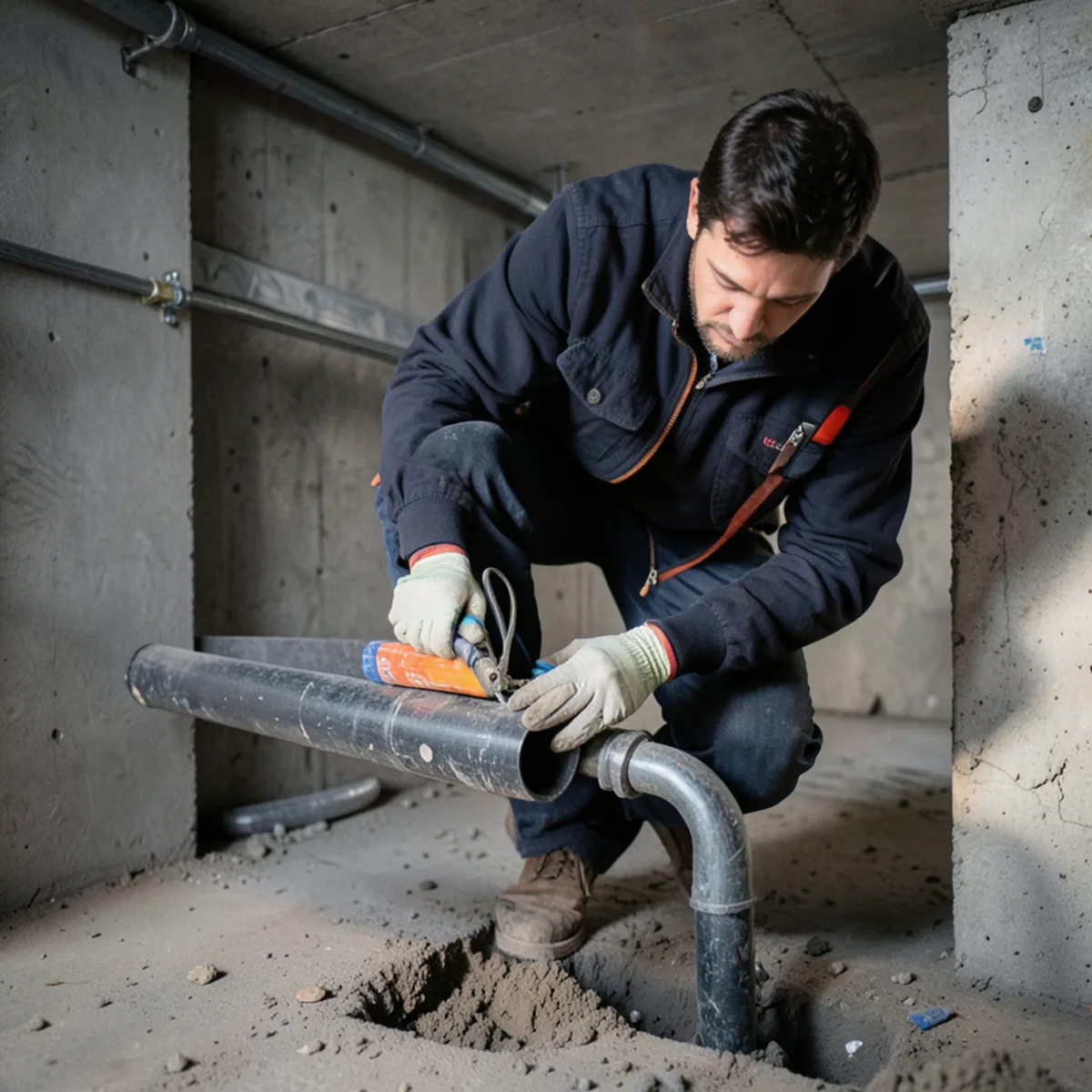
Excavating and replacing an isolated broken clay joint, dropped bell, or sheared connection on private property, bedded in crushed squeegee gravel with heavy-duty shielded transition couplings.
Complete residential trenchless pipe bursting (60 to 100 feet): $7,000 to $11,500
Pulling continuous, seamless SDR 17 HDPE pipe through the failing host pipe from foundation to property boundary, including two small access pits, exterior dual cleanouts, and city inspection.
Street tap excavation with full municipal right-of-way restoration: $8,500 to $15,000+
Deep roadway excavation to replace damaged municipal taps or saddles beneath asphalt streets, including traffic safety plans, steel plating, flowable slurry, and hot-mix asphalt patching.
Beware of high-pressure "flat-rate" bait-and-switch sewer tactics
Homeowners must remain vigilant against predatory marketing tactics employed by certain national plumbing franchises operating across the Denver area. These operations frequently advertise loss-leader promotions—such as "$99 Main Line Drain Clearing"—solely to gain access to your home cleanout. Once on site, their commissioned salesmen feed a camera into your line and falsely claim that minor surface spiderweb cracks or normal clay joint lips represent an "imminent catastrophic collapse" requiring an immediate $15,000 full-yard excavation. Never authorize major sewer replacement on the spot under duress. Insist on receiving the unedited, timestamped video footage, demand an itemized written quote, and contact an independent, local specialist for a second opinion.
How to verify plumbing licenses on the Colorado DORA database
Before signing any sewer repair agreement exceeding $1,000, always verify that the plumbing contractor holds an active Master Plumber license and Plumbing Contractor registration with the Colorado Department of Regulatory Agencies (DORA). Unlicensed root-clearing franchises frequently dispatch commission-based sales technicians who lack licensed plumbing credentials and subcontract excavation work to unbonded third parties.
Key questions to ask before signing a sewer repair contract
Require every contractor to provide written answers to three fundamental questions: (1) Does your bid include all municipal permit fees, traffic control, and right-of-way street cut restoration? (2) Will you provide an unedited post-repair CCTV camera inspection recording proving code compliance? (3) Does your warranty cover both materials and labor against ground settlement for at least 10 to 25 years?
How to offset costs: insurance endorsements and flexible financing
Major sewer lateral repairs do not have to drain emergency savings. First, contact your homeowners insurance carrier to verify whether you carry an optional "Buried Utility Service Line" endorsement. These riders typically provide up to $10,000 in replacement coverage with modest $500 deductibles. In addition, our Littleton shop partners with approved financing providers to offer flexible, low-interest payment plans that distribute project costs over manageable monthly installments.